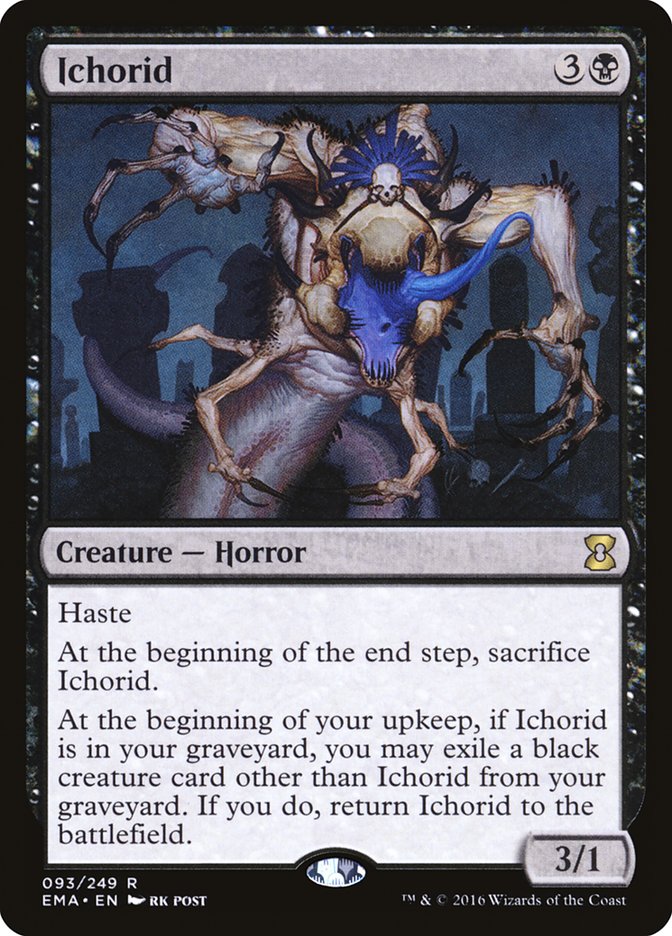
Everything rots. Only Ichorid walks. Ichordân is the mono-black entry in the Dandan shared-deck family, and its v2 table rule sharpens the knife: non-Ichorid creatures have defender. They cannot attack. They stand in the muck — blocking, sacrificing, feeding the pile — while Ichorid alone drags itself out of the shared grave and swings for three.
Both players draw from a single 80-card library and share one graveyard. Every creature you discard, mill, or sacrifice falls into that common pit. On your opponent's upkeep, the same black bodies you threw away may claw their Ichorid back to the battlefield. The central question is not just when do I stock the grave — it is which corpses can I afford to leave in there.
Format Rules
- One shared 80-card library.
- One shared graveyard.
- Each player has their own hand, battlefield, life total, exile, and mana pool.
- Both players start at 20 life.
- Any effect that says "your graveyard" sees the shared graveyard for the player controlling that effect.
- Free mulligan any hand with fewer than two lands or fewer than two spells; then normal mulligans apply.
- Whenever a player searches the shared library, that player shuffles it afterward. Cards placed into the shared graveyard by that effect become public resources immediately — if your opponent Entombs on your end step, you see it and may respond before their upkeep.
Table Rule — v2: The Bog
Non-Ichorid creatures have defender.
- Creatures with defender cannot attack. They may still block, be tapped, be sacrificed, or activate abilities normally.
- Ichorid does not gain defender from this rule. It is the only creature that attacks.
- This makes the flavor explicit: everything else is stuck in the tar, guarding, feeding, or drowning. Only Ichorid crawls out.
Inspired by the Dandân / Forgetful Fish format.
Ichordân v2.1 — 80 Cards
Creatures — 28
- 8Ichorid
- 4Putrid Imp
- 4Stitcher's Supplier
- 4Blood Pet
- 3Fleshbag Marauder
- 2Withered Wretch
- 2Blood Vassal
- 1Crypt Rats
Graveyard Manipulation — 12
- 4Tortured Existence
- 4Buried Alive
- 2Entomb
- 2Corpse Churn
Interaction — 14
- 4Diabolic Edict
- 4Bone Shards
- 3Nameless Inversion
- 3Darkblast
Lands — 26
- 15Swamp
- 2Bojuka Bog
- 2Spawning Pool
- 2Barren Moor
- 1Takenuma, Abandoned Mire
- 1Witch's Cottage
- 1Mortuary Mire
- 1Memorial to Folly
- 1Phyrexian Tower
Card Spotlights
Ichorid is the format's heartbeat. Every upkeep, both players scan the shared graveyard: is there a black creature to exile? Because of the shared pile, the answer is almost always yes — the question is whether you want to spend that resource now or destroy it. Ichorid deals three haste damage and leaves the battlefield itself, however ichorid cannot exile its own body to reanimate. Eight copies ensures the format never lacks for a trigger, but also means the pile fills with Ichorids quickly. The question of which Ichorid to exile for which upkeep is the central recurring skill test.
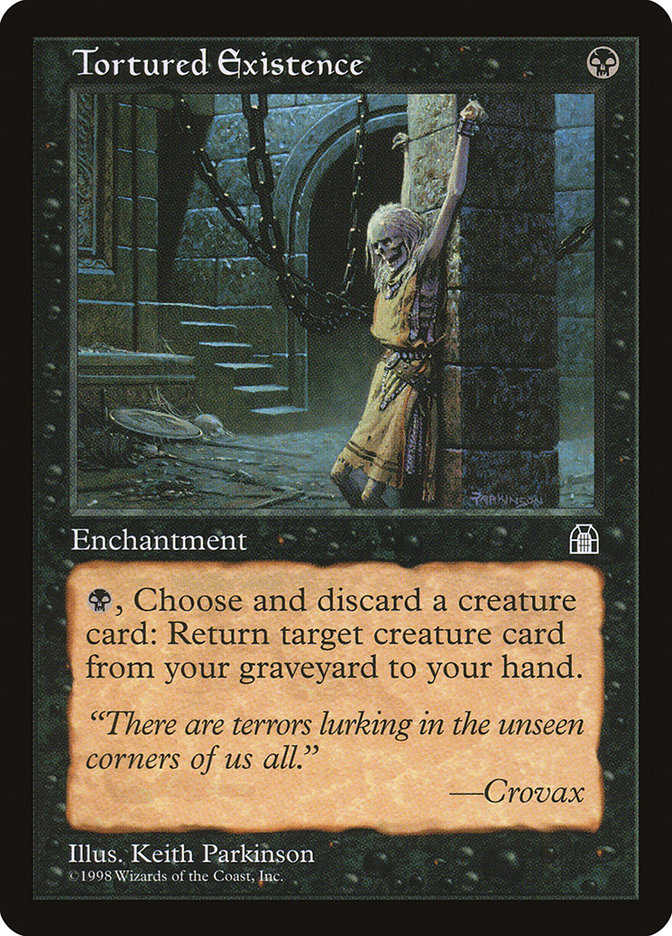
One mana to swap a hand creature for any creature in the shared graveyard. This is the format's retrieval engine and its safety valve simultaneously. It lets you pull the critical black creature out of the pile before your opponent can use it as Ichorid food — or it lets you trade a dead card in hand for a live threat. In practice, Tortured Existence activates happen at instant speed, often on the opponent's upkeep when they are about to benefit from a graveyard trigger. The format's deepest games are decided by who controls Tortured Existence and when.
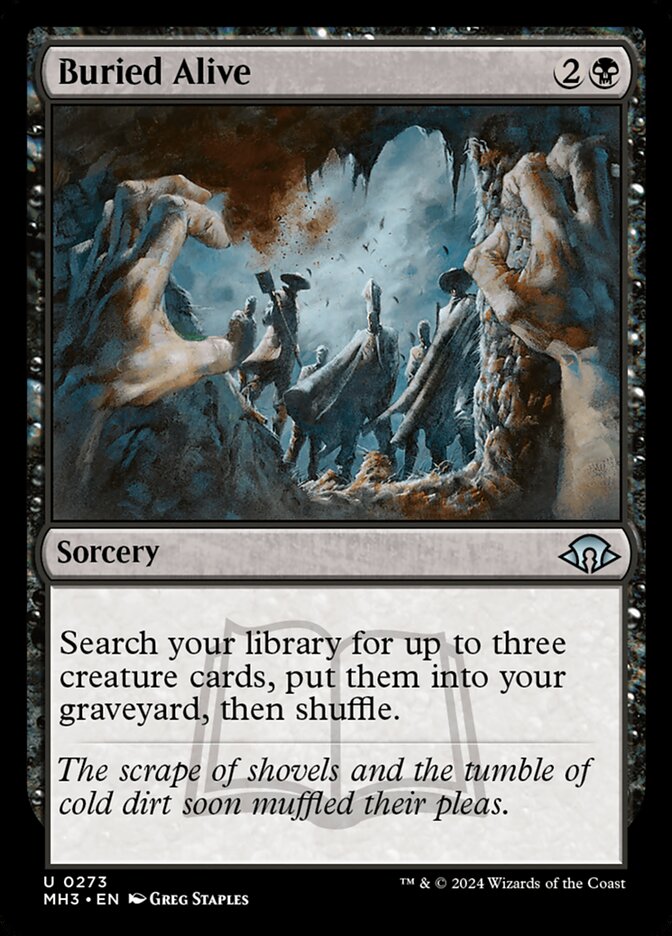
Three creatures directly into the shared graveyard at once. Buried Alive is the single most explosive setup spell in the format — and the most dangerous. Cast it at the wrong moment and you have just loaded your opponent's next three Ichorid triggers. Cast it with a Tortured Existence in play and mana open, and you can often retrieve the best piece before they can respond. The correct use of Buried Alive is one of the hardest decisions in Ichordân: this card rewards patience and punishes greed.
Why Ichorid?
It is the only thing still moving. With the v2 defender rule in place, every non-Ichorid creature on the battlefield is rooted to the spot — blocked in the bog, able to sacrifice, able to block, unable to advance. Ichorid is the sole exception. It has haste, attacks for three, then dies and rejoins the shared grave. The rule doesn't just change creature math; it changes what the format is about. Combat becomes entirely singular: one creature, one body, one trigger, one swing.
It creates a genuine shared-graveyard dilemma. When you discard or mill black creatures, you are not just fueling your own engine. You are stocking a public grave. On your opponent's upkeep, those same rotting bodies may drag their Ichorid back across the threshold. The format's deepest skill test is reading which corpses are safe to leave in the pile and which ones need to be exiled or traded away before they crawl out on the wrong side of the table.
It pulses like a heartbeat. Ichorid has haste, deals its damage, and sacrifices itself at end of turn. The battlefield never snowballs from a single creature. Every game develops a rhythm: Ichorid rises, swings, falls, and sinks back into the shared grave — then the fight begins again over who gets to exile the next black body and bring it back. Choosing which creature to spend on the trigger, or whether to spend one at all, is the central recurring decision of Ichordân.
Key Cards
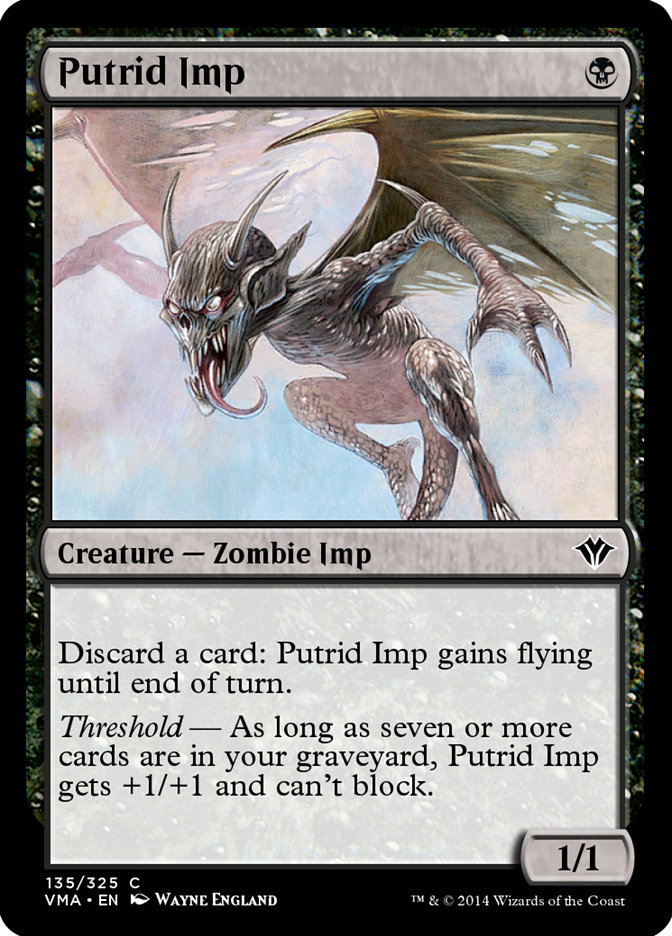
The cleanest way to get Ichorid into the shared graveyard — one mana, at instant speed, and it gains flying as a bonus. In a shared format the timing of when you discard is everything. Binning a creature at the start of your upkeep is usually correct; discarding during your own main phase risks feeding their upkeep trigger before you can use yours. At threshold, Putrid Imp also becomes a 2/2 flyer that can't block, which adds evasive pressure in the late game.
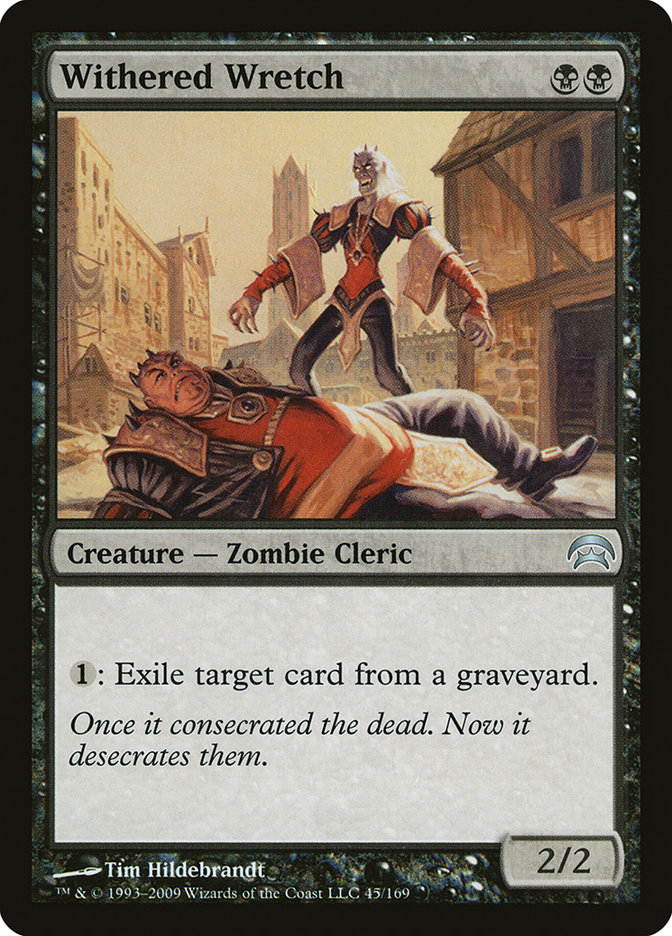
One mana to permanently exile any card from the shared graveyard. Withered Wretch is the format's surgical instrument: it lets either player fight over specific targets rather than letting the pile become automatic Ichorid food. Two copies is the right number — enough to appear consistently, not enough to dominate games by exhausting the entire pile. The threat of a Wretch activation keeps both players honest about which cards they let sit in the shared graveyard.
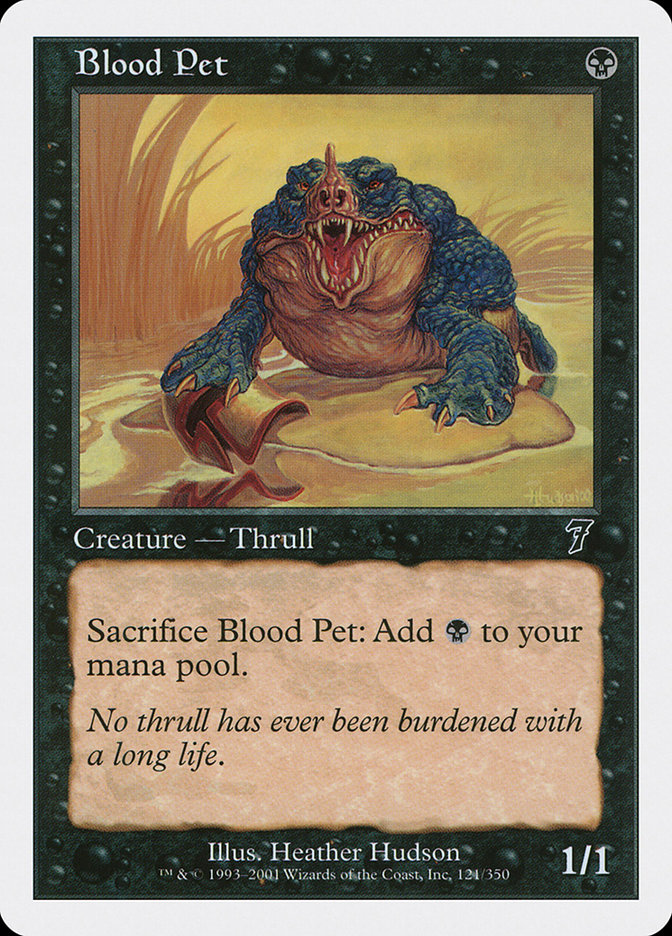
A Thrull bred for one purpose: to die on command. Blood Pet blocks in the early game, sacrifices for mana when you need to push through a key spell, and immediately drops a black creature card into the shared grave — exactly where Ichorid wants it. Under the defender rule, its inability to attack is irrelevant; it was never supposed to advance. It waits, serves, and falls. The core play pattern writes itself: Blood Pet sits. You sacrifice it for {B}. It enters the public grave. On the next upkeep, either player may exile it to return Ichorid. A better drowned creature than anything with ambitions.
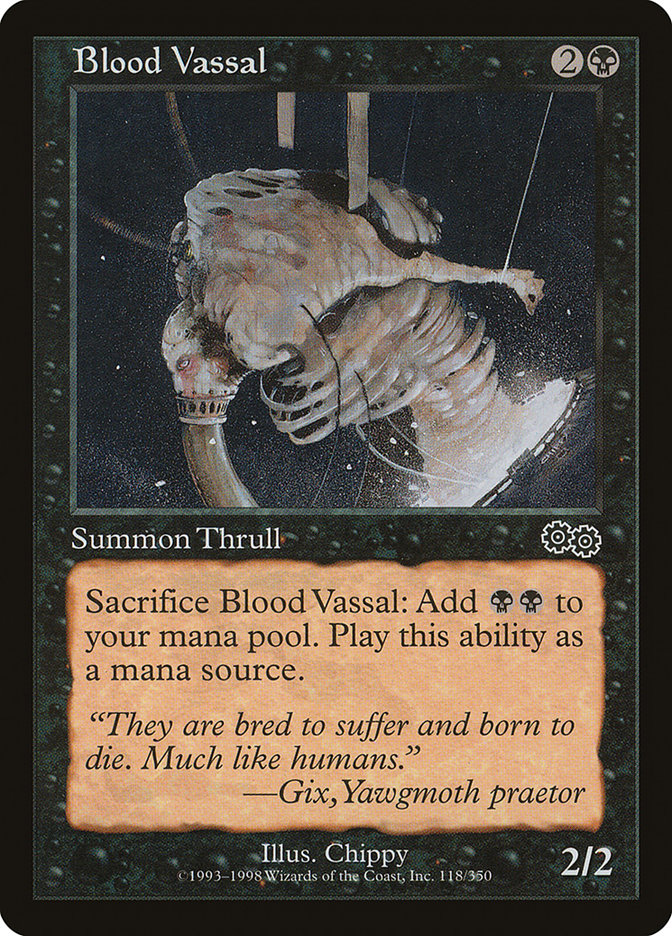
Where Blood Pet is cheap fuel, Blood Vassal is the burst offering. Two mana in, two black mana out — a body that holds the line at 2/2 then cracks open into the mana you need to play Buried Alive on the same turn, fire off a Diabolic Edict with extra pressure, or push Tortured Existence activations through a lean mana development. The format needed more than one sacrifice-for-mana creature, but not eight of them. Two Blood Vassals alongside four Blood Pets gives the deck three distinct utility roles without collapsing into a single repeated loop. The Thrull serves. Then it dies. That is enough.
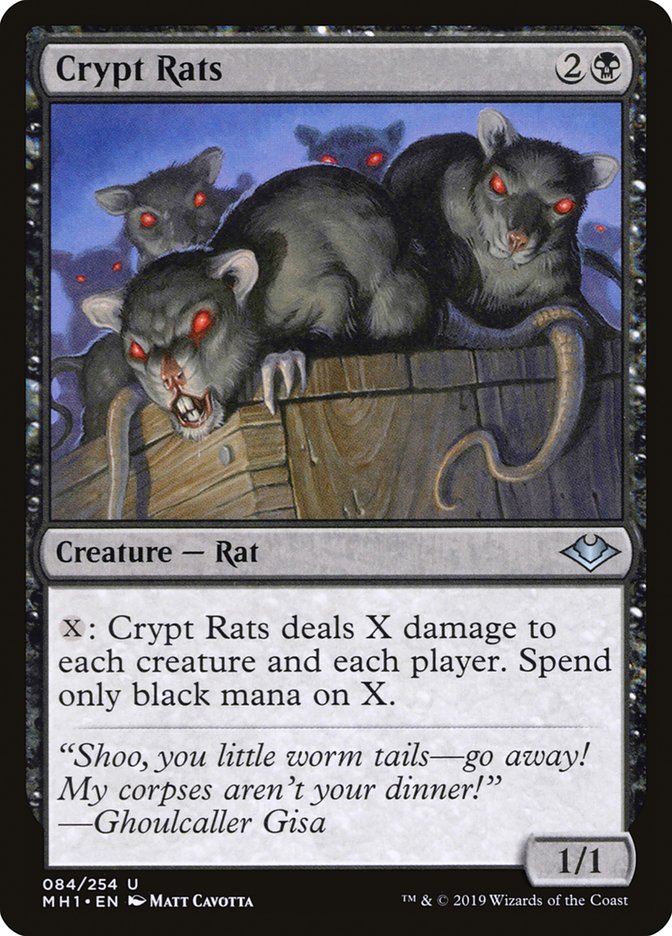
One copy. That is the correct count, and the reasons are all about format texture. Crypt Rats is a mana sink that doubles as a sweeper, a life-pressure valve, and a finisher if the board stalls behind a wall of 0/1 defenders. Activate it for one to clear a cluttered battlefield; activate it for three to drain both players and break a symmetrical grind. Under the defender rule, an opponent sitting behind blockers with no Ichorid in the grave is particularly vulnerable — Crypt Rats reaches over the defensive wall and drains life directly. One copy is enough. Two would make graveyard-filling feel punishing in a way that kills the format's rhythm. One is a threat that changes how both players think about the late game.
The Grave Setup Package
The v2 graveyard setup package splits instant-speed access into two distinct tools. Together with four Buried Alive, they give the deck three modes of interring the dead: sorcery-speed bulk, instant-speed precision, and instant-speed chaos.
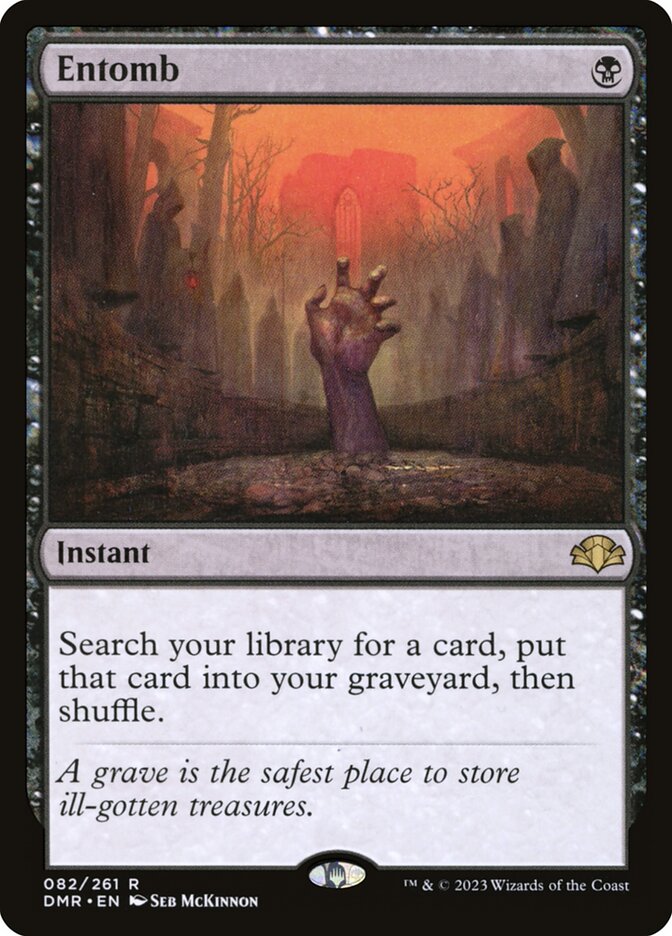
One mana, at instant speed, for any card directly to the shared grave. Entomb is the high-agency card: it finds Ichorid at end of step, sets up the upkeep trigger, and lets you sequence the return before your opponent can position a Withered Wretch activation or Tortured Existence response. The most reliable line is end-step Entomb Ichorid → upkeep exile Blood Pet → return Ichorid → attack → sacrifice at end step. Two copies, not four. Four Entombs makes the deck too scripted; the format wants improvisation around a messy shared grave, not a clockwork engine. Entomb is the scalpel. Use it surgically.
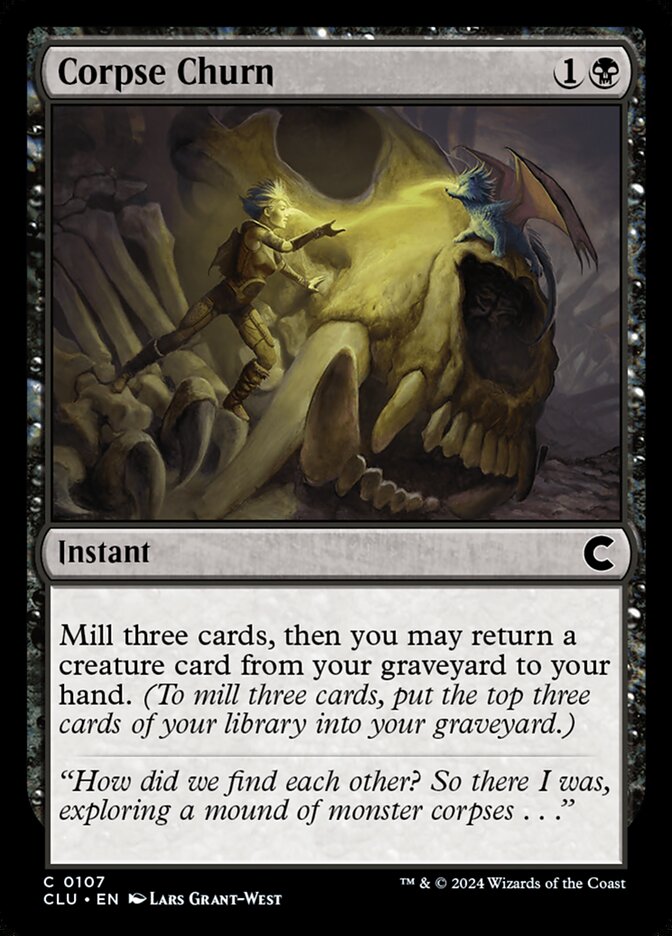
Less precise than Entomb, more honest to the format. Corpse Churn mills three cards into the shared grave — which may include your Ichorid, their Blood Vassal, or the one Blood Pet both players were watching — and then lets you claw one creature back to hand. It adds genuine uncertainty. You cannot fully predict what it buries. That unpredictability is a feature, not a fault; it keeps both players reading the same pile rather than executing separate scripts. Corpse Churn is the better format card. Entomb is the better power card. Two of each is the correct starting point.
Key Play Patterns
The central question in every game:
Which corpses can I afford to leave in the shared grave — and which ones will come back for the wrong side?
The core Ichorid line:
Upkeep: Exile Blood Pet (or any black creature) from the shared grave.
Ichorid returns to the battlefield with haste.
Attack for three. Beginning of end step: sacrifice Ichorid.
Ichorid falls back into the shared grave. The cycle begins again.
Every card in the deck feeds or threatens this loop:
- Putrid Imp discards black creatures to the grave on demand — but timing is everything. Bin on your upkeep, not your main phase, or you are loading your opponent's trigger before yours.
- Blood Pet blocks, sacrifices for mana, and immediately enters the public grave as clean Ichorid food. Under the defender rule, it was never attacking anyway — dying usefully is its entire purpose.
- Stitcher's Supplier mills three on entry and three on death; both events are gifts to the shared pile. Never block with it carelessly — its death is a resource you may want on your terms.
- Buried Alive is the most dangerous spell in the format. It stocks three bodies at once — which means three potential Ichorid triggers for whoever moves first. Cast it when you have Tortured Existence mana open.
- Corpse Churn adds chaos: you cannot fully control what it buries. Both players watch the same mill. Sometimes it drops the Blood Vassal you were about to sacrifice, or buries a Crypt Rats right before a critical combat. That uncertainty is the format's texture.
- Blood Vassal absorbs an early threat, then cracks for two black mana when the time is right. Sacrificing it into Buried Alive on the same turn is the kind of compressed line that decides tight games.
- Crypt Rats is the format's pressure valve. Both players fill a shared grave with black creatures and hide behind defender; Crypt Rats punishes the stall. Activate for one to clear token noise, activate for three to drain life through the whole defensive formation.
- Bone Shards sacrifices a creature for a cost reduction — every sacrifice is another black body entering the shared grave, another potential Ichorid trigger for whoever moves first.
- Fleshbag Marauder forces both players to sacrifice, adding bodies to the pile on both sides. Under the defender rule, its 3/1 body is a roadblock — but what it drops into the grave may matter more than anything it ever blocks.
Cards to Avoid
The bog has its rules. Some cards break them outright; others simply drain the swamp.
- Dauthi Horror — lost its reason to exist. Shadow let it attack through blockers. Under the defender rule, it cannot attack at all. A shadow creature stuck in the mud is just a 2/1 with no upside.
- Four Entombs — not a card to cut, but a count to resist. Four makes the engine too precise and scripted. The format's tension comes from improvising around a messy public grave. Keep it at two.
- Reanimate, Exhume, Living Death — too explosive. These let a player pull a creature directly onto the battlefield from the shared grave, bypassing the upkeep trigger that defines Ichorid's rhythm.
- Blood Artist, Grave Pact, Dictate of Erebos — aristocrat payoffs that warp the format into sacrifice loops rather than graveyard fights.
- Bridge from Below — creates token triggers from shared graveyard exiles; the interaction with the defender rule and shared pile becomes a rules nightmare.
- Dauthi Voidwalker — exiles cards from the shared grave as they arrive. This removes the entire contested-resource structure that makes the format interesting.
Tuning the Bog
Games end too fast: cut a Stitcher's Supplier, add a Nameless Inversion or Darkblast.
Ichorid dominates too hard: move Withered Wretch to 3 copies; its repeated exile ability can police the grave without warping the format.
Setup feels too inconsistent: resist adding a third Entomb. Instead, test a third Corpse Churn — it stocks the grave while retrieving, which is what the format wants.
Graveyard fills too slowly: consider Altar's Reap (instant-speed sacrifice outlet with card draw) or Night's Whisper for additional hand pressure.
Too slow overall: cut a utility land for a 16th Swamp. Barren Moor is the first to go if the cycling cost feels like a tax.