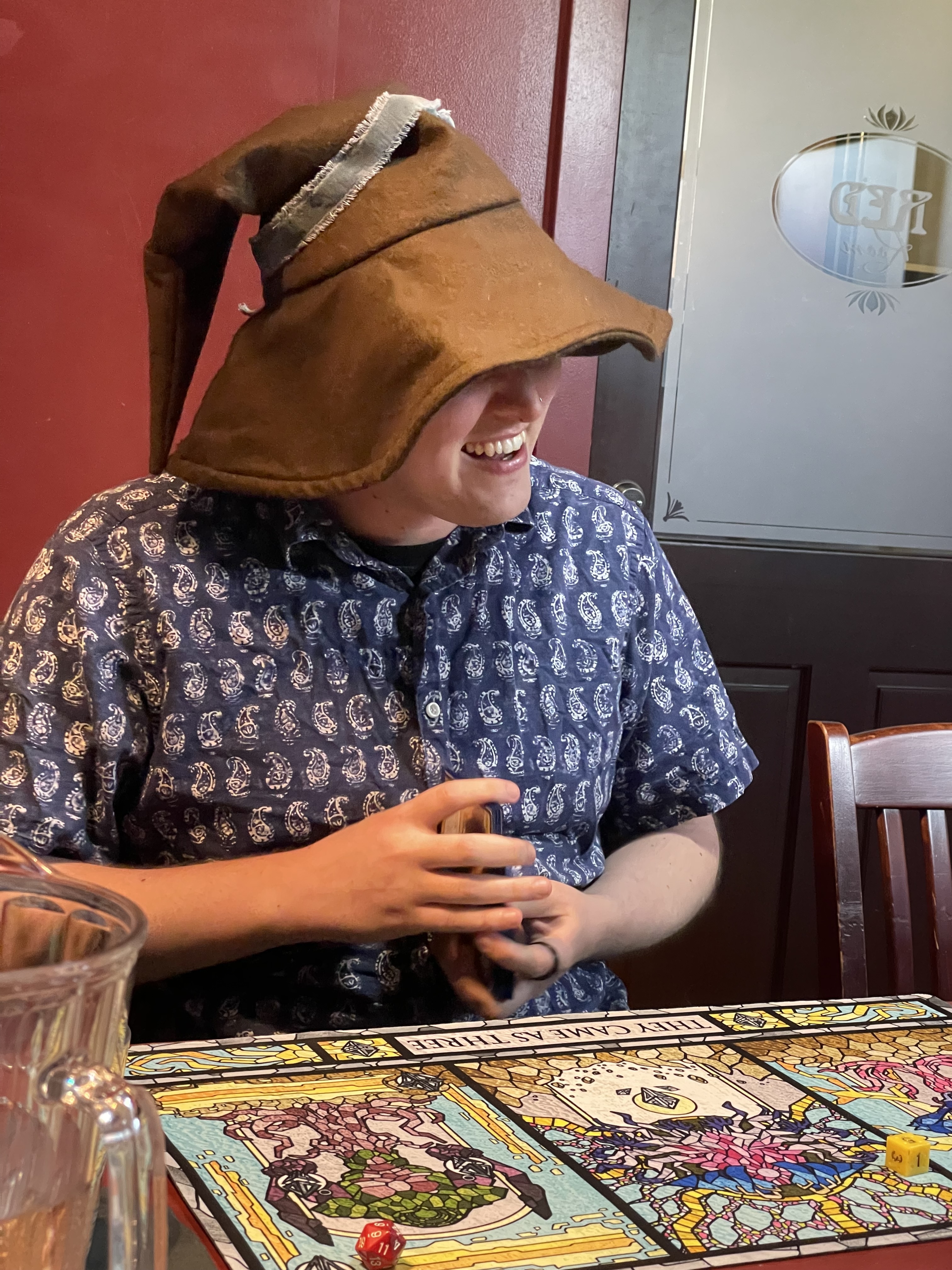
Five players, ten guilds on the table, and a Return to Ravnica booster draft that delivered on every promise the set makes. The pod split cleanly across guild lines — Rakdos, Selesnya, Azorius, Jund, and Golgari each found their seat. What followed was a session that showed off exactly why RTR draft remains one of the format's all-time classics: the guilds are distinct, the signals are readable, and the winner is the drafter who commits first and drafts the tightest 40.
Return to Ravnica is a two-set block draft run with three RTR packs. The set introduced five guilds — Azorius (detain), Rakdos (unleash), Selesnya (populate), Izzet (overload), and Golgari (scavenge) — each with a distinct keyword and clear archetype. The format rewards early commitment; straying into a third color is a tax most decks can't afford.
B R Rakdos — The Winner
The Rakdos deck was everything the guild promises: fast, punishing, and disruptive. Unleash creatures attacked from turn two and never stopped. The combination of cheap threats and direct removal kept opponents perpetually behind on board, and the deck closed games before the slower guilds could set up their engines.
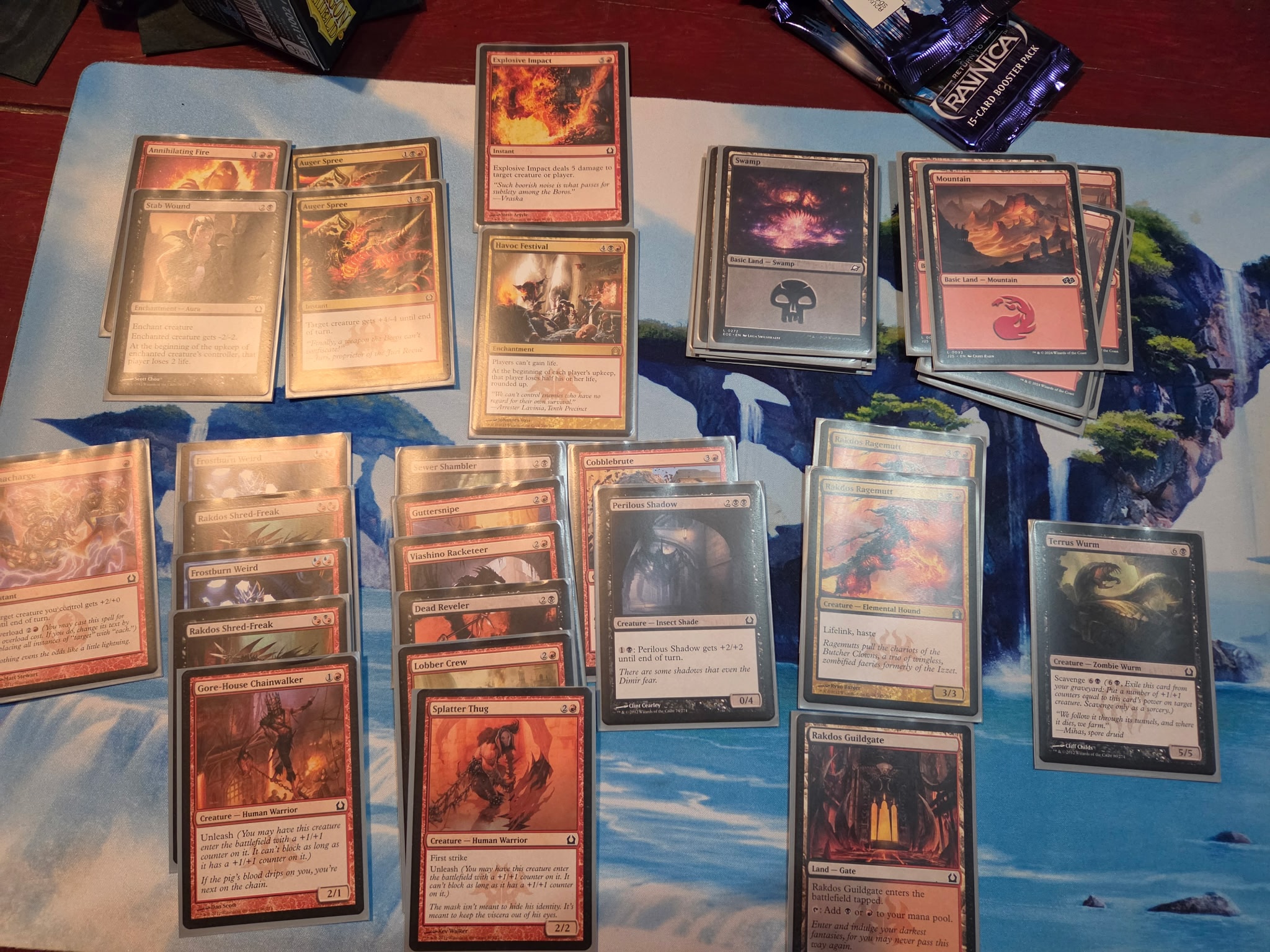
B R Creatures (17)
- 1Cobblebrute
- 2Dead Reveler
- 2Frostburn Weird
- 1Gore-House Chainwalker
- 1Guttersnipe
- 1Lobber Crew
- 1Perilous Shadow
- 2Rakdos Ragemutt
- 2Rakdos, Shred-Freak
- 1Sewer Shambler
- 1Splatter Thug
- 1Terrus Wurm
- 1Viashino Racketeer
Spells (7)
- 1Annihilating Fire
- 2Auger Spree
- 1Dynacharge
- 1Explosive Impact
- 1Havoc Festival
- 1Stab Wound
Lands (17)
- 1Rakdos Guildgate
- 8Mountain
- 8Swamp
Seven spells in this deck — Annihilating Fire, two Auger Sprees, Dynacharge, Explosive Impact, Havoc Festival, Stab Wound — means Guttersnipe wasn't just a beater, it was a passive reach engine. Every piece of removal became a two-for-one with the Snipe on board. Against opponents grinding to stabilize at 10 life, this pinged the clock closed before combat started.
A six-mana enchantment in an aggro deck sounds wrong on paper. But Rakdos plays enough chip damage that opponents often reach the mid-game at 8–10 life. Havoc Festival at that point is a two-upkeep clock that can't be outrun with lifegain — and this deck had already shut off the Selesnya lifegain subtheme entirely. The closer opponents literally cannot answer by gaining life. After the main draft, we played a free for all multiplayer with our draft decks, and let's just say this card unleashed plenty of Havoc. The Rakdos deck was able to get all the other players into low life totals and use burn to eek out the win.
Unleash is the mechanic that made this deck go. Every Rakdos creature offers the same choice: take the counter and commit to aggression, or hold it back as a blocker. In a deck this proactive, the answer is almost always take the counter. Gore-House Chainwalker exemplifies why — a 3/2 for two mana on the play is ahead of rate in every matchup, and in a deck that ends games on turn five or six, you're never planning to block anyway. The pressure that unleash creates is as much psychological as it is mathematical: once your opponent knows you're always putting the counter down, they're forced to answer every threat immediately or lose the race.
Two copies in the deck, and both earned their slot multiple times over. Auger Spree is one of RTR's most versatile instants: in combat it turns any attacker into a lethal weapon, pumping it over a blocker while simultaneously killing whatever it trades with via the toughness reduction. Out of combat it's clean removal for any creature with four or fewer toughness — utility creatures, x/4 blockers, and anything else that would otherwise survive a combat trade. The two-color cost is real, but a one-Rakdos-Guildgate mana base running eight of each basic handled it without strain. This card was never a dead draw.
W U Azorius — 2nd Place
The Azorius deck leveraged detain to control combat, buying time to set up fliers for the kill. A disciplined aggro-control build that punished the slower Selesnya and Golgari matchups. Finished second in the pod after a close loss to Rakdos where the aggressive start proved too much to navigate.
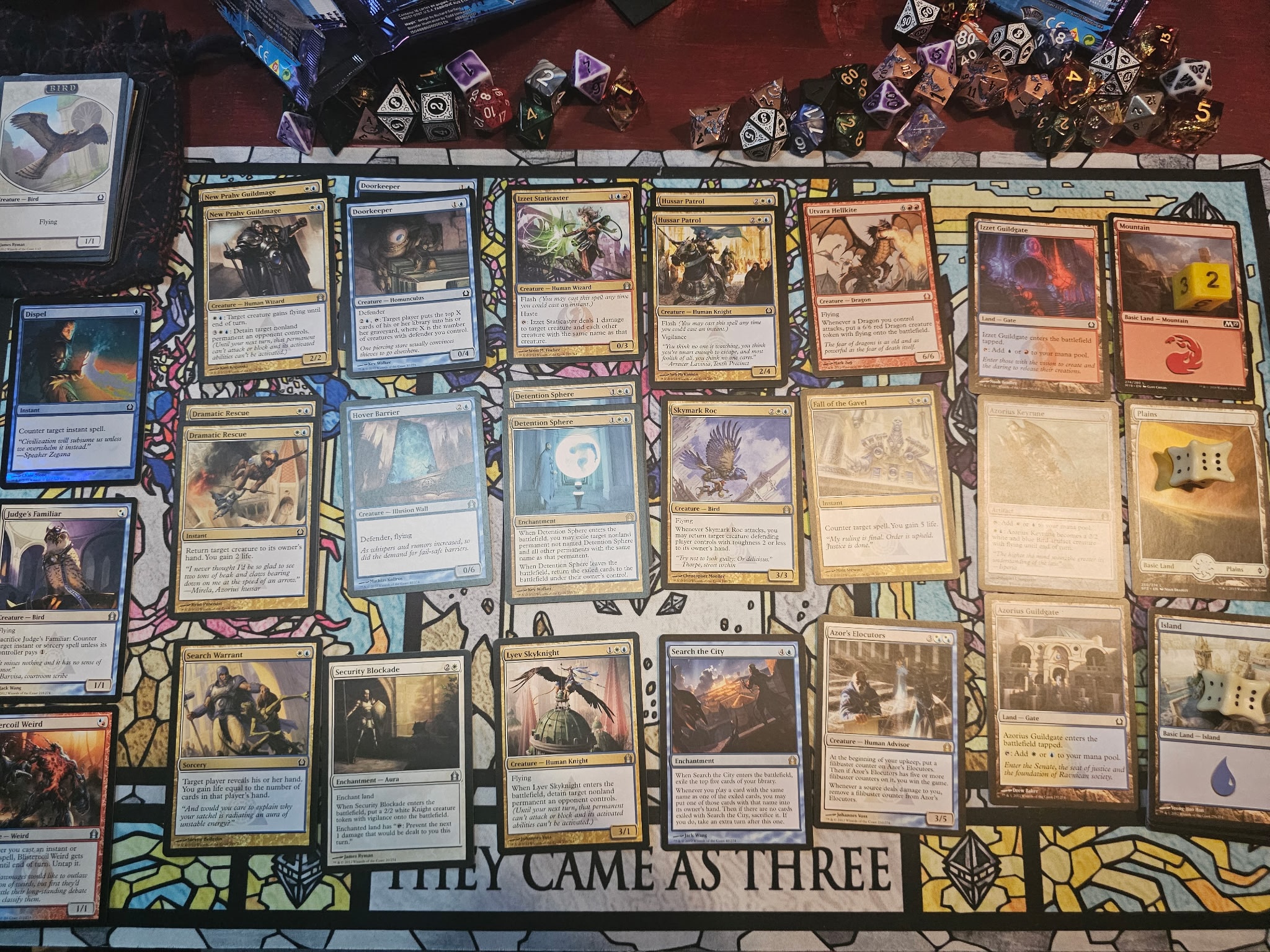
W U Creatures (14)
- 1Azor's Elocutors
- 1Blistercoil Weird
- 2Doorkeeper
- 1Hover Barrier
- 2Hussar Patrol
- 1Izzet Staticaster
- 1Judge's Familiar
- 1Lyev Skynight
- 2New Prahv Guildmage
- 1Skymark Roc
- 1Utvara Hellkite
Spells (10)
- 2Search Warrant
- 1Azorius Keyrune
- 2Detention Sphere
- 1Search the City
- 1Security Blockade
Lands (16)
- 1Izzet Guildgate
- 1Azorius Guildgate
- 6Plains
- 6Island
- 2Mountain
Three mana for a 3/1 flier is already at rate in RTR. The detain trigger on entry makes it the deck's premium threat: it attacks in the air while an opponent's best blocker or key permanent sits frozen for a full turn. Against Golgari, it bought two or three uncontested attack steps before the scavenge engine could find its footing. The kind of card that looks modest until it's across the table from you.
Handles creatures, enchantments, and artifacts at the same cost — the Swiss Army knife of RTR removal. With two copies in the deck, the Azorius player could lock down multiple threats simultaneously. The "comes back when it leaves" risk is real, but RTR has almost no widespread enchantment removal, so Detention Sphere tended to stay on the table until the game ended.
G W Selesnya / Splash Azorius (BANT)
The Bant build leaned on cheap combat tricks to keep a core of vanilla fliers resilient in the air, while lockdown pieces — Arrest, Inaction Injunction, and Soul Tithe — worked to stall Rakdos's ground assault. The plan held through games one and two, but in game three the persistent chip damage from unleash creatures proved too much to absorb. Solid on-curve bodies in Centaur Healer and Loxodon Smiter gave the deck a real mid-game; the weak point was removal. Avenging Arrow showed up too late or too slowly too often — by the time the mana was available, either a creature had already been lost in combat or the life total was already too far gone for killing one attacker to matter.
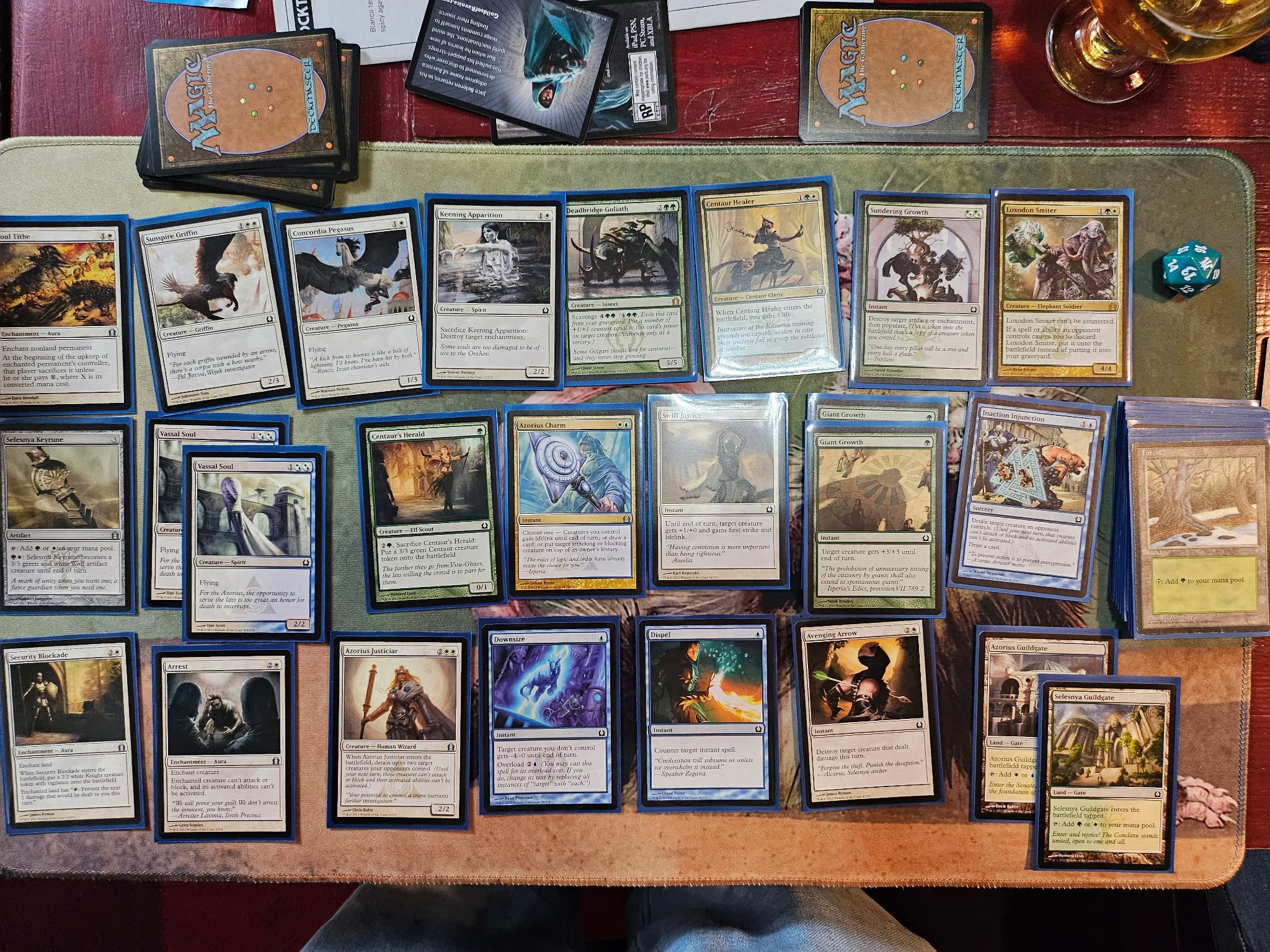
G W Creatures (10)
- 1Azorius Justiciar
- 1Centaur Healer
- 1Centaur's Herald
- 1Concordia Pegasus
- 1Deathbridge Golaith
- 1Keening Apparition
- 1Loxodon Smiter
- 1Sunspire Griffin
- 2Vassal Soul
Spells (13)
- 1Inaction Injunction
- 1Avenging Arrow
- 1Azorius Charm
- 1Dispel
- 1Downsize
- 2Giant Growth
- 1Sundering Growth
- 1Swift Justice
- 1Selesnya Keyrune
- 1Arrest
- 1Security Blockade
- 1Soul Tithe
Lands (17)
- 1Azorius Guildgate
- 1Selesnya Guildgate
- 5Forest
- 5Plains
- 5Island
Alongside Loxodon Smiter, Centaur Healer formed the backbone of the mid-game. A 3/3 on curve is a meaningful body against Rakdos's early attackers, and the 3 life on entry widened the margin needed to survive into the turns where the lockdown pieces could start doing work. Neither creature was flashy, but both did exactly what the deck needed — show up on time, trade up, and buy a turn.
One mana made the fliers difficult to race. A Concordia Pegasus or Vassal Soul that would otherwise trade neutrally in combat suddenly wins it outright — first strike means it deals damage before the blocker, lifelink means the damage comes back as life, and the whole exchange costs one white mana at instant speed. Against Rakdos, where every point of life matters and every combat step is a resource, this card pulled well above its mana cost. Simple text, enormous impact in the aggro matchup.
The deck needed removal, and Avenging Arrow was supposed to fill that role. In practice it underdelivered. The three-mana cost meant it was almost always competing with a more important play for the same turn — and the conditional trigger meant it only answered a creature after it had already dealt damage. Against a Rakdos deck shaving life totals down every attack step, paying three mana to kill something after it already connected rarely felt like a trade worth making. A card that looks like removal but plays like a tempo loss.
B R G Jund
The three-color Jund build took a bold line, pairing Golgari's scavenge engine with Rakdos reach and splashing green for powerful ramp and top-end threats. The mana was ambitious for RTR but the fixing was there. A high-variance deck that could do explosive things when the mana cooperated.
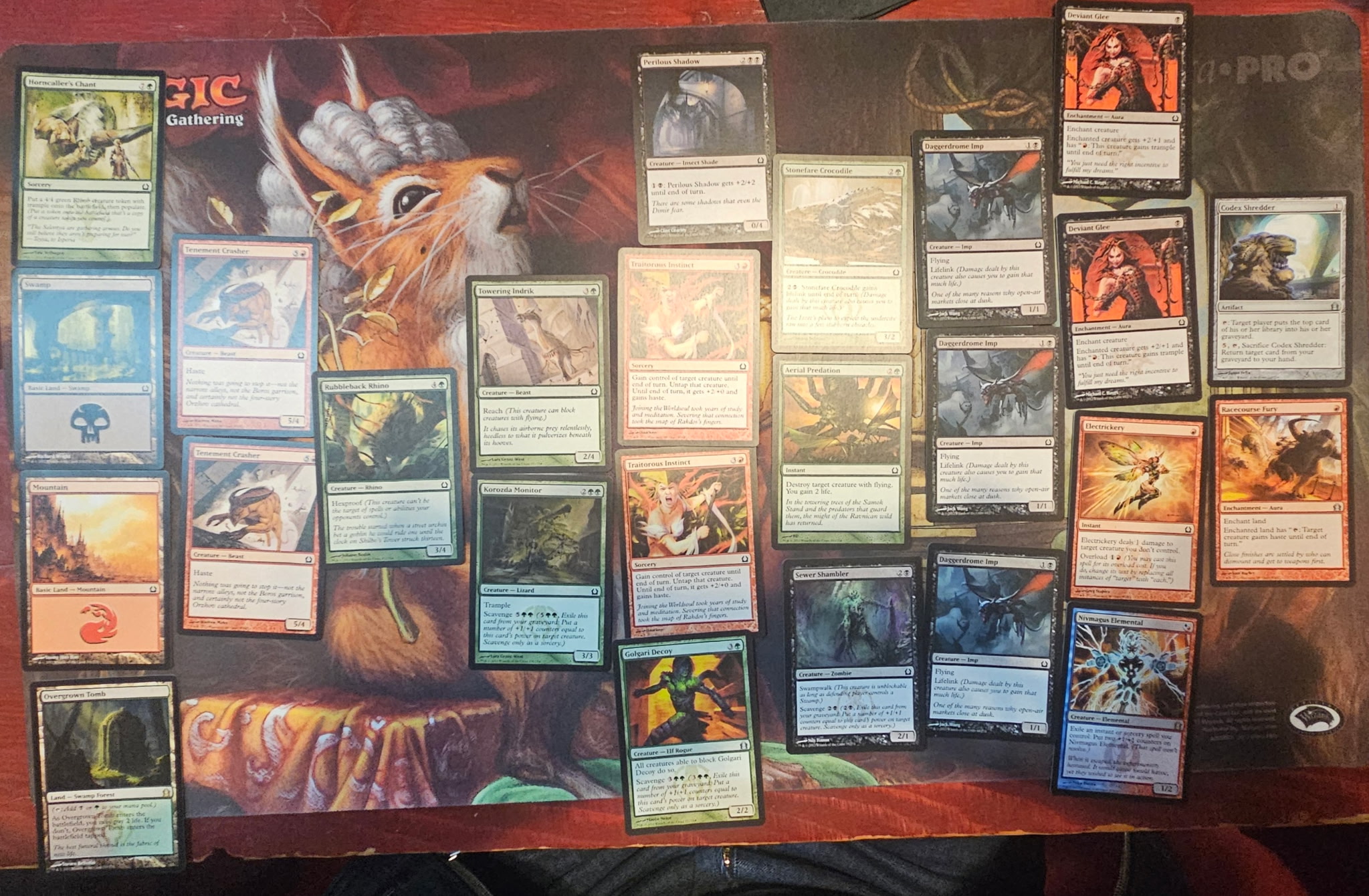
B R G Creatures (16)
- 3Daggerdrome Imp
- 1Golgari Decoy
- 1Korozda Monitor
- 1Nivmagus Elemental
- 2Perilous Shadow
- 1Rubbleback Rhino
- 2Sewer Shambler
- 1Stonefare Crocodile
- 2Tenement Crasher
- 1Deadbridge Goliath
- 2Towering Indrik
Spells (7)
- 1Horncaller's Chant
- 2Traitorous Instinct
- 1Codex Shredder
- 2Deviant Glee
- 1Racecourse Fury
Lands (17)
- 1Overgrown Tomb
- 5Swamp
- 5Mountain
- 6Forest
The Jund deck's most resilient threat. A 5/5 for four mana dominates any ground combat; if it dies, it turns into a five-counter scavenge target for the next survivor. In a three-color deck that sometimes stumbled on mana, a card that provides value from both the battlefield and the graveyard is exactly the kind of two-dimensional threat a shaky mana base needs to stay competitive in the mid-game.
A tempo swing that doubles as a finishing move. Stealing Golgari's Deadbridge Goliath or the Azorius player's Lyev Skyknight for a turn — then swinging with haste into an open board — is the kind of explosive play Jund was built for. The "can't be blocked by fewer than two creatures" clause means the stolen creature almost always connects, making this both a removal spell and a near-guaranteed damage spell in the same card.
B G Golgari
The Golgari deck was the most synergistic of the pod — a classic scavenge engine built around filling the graveyard and converting dead creatures into counter pumps for the survivors. It had the highest ceiling of any deck in the draft but ran into the classic Golgari problem: the engine takes time to set up, and Rakdos doesn't give you time.
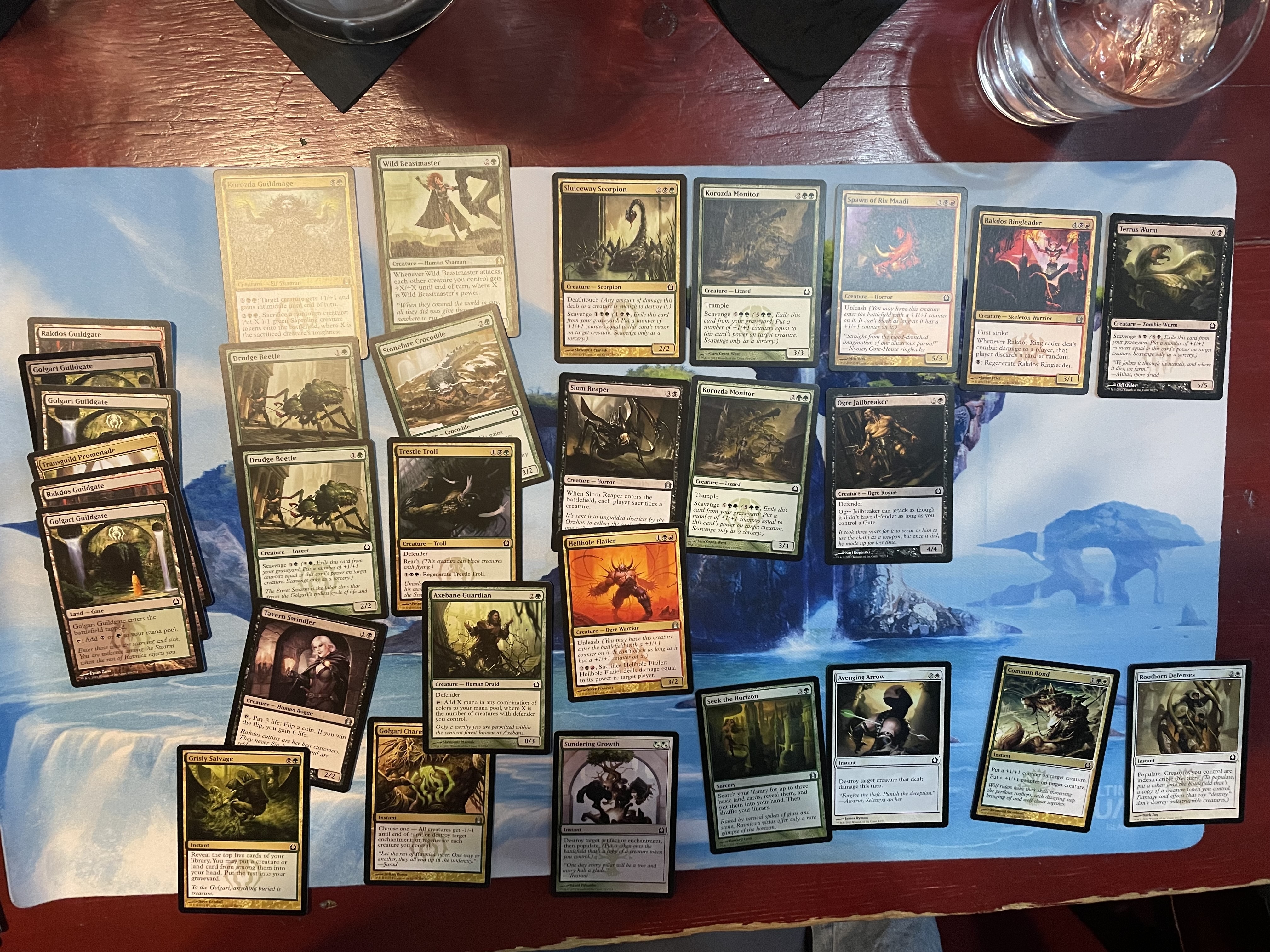
B G Creatures (16)
- 2Drudge Beetle
- 1Axebane Guardian
- 1Hellhole Flailer
- 1Korozda Guildmage
- 1Korozda Monitor
- 1Ogre Jailbreaker
- 1Rakdos Ringleader
- 1Sluiceway Scorpion
- 1Slum Reaper
- 1Spawn of Rix Maadi
- 1Stonefare Crocodile
- 1JTavern Swindler
- 1Terrus Wurm
- 1Trestle Troll
- 1Wild Beastmaster
Spells (9)
- 1Seek the Horizon
- 1Avenging Arrow
- 1Common Bond
- 1Grisly Salvage
- 1Rootborn Defenses
- 1Golgari Charm
- 1Sundering Growth
Lands (17)
- 3Golgari Guildgate
- 2Rakdos Guildgate
- 2Swamp
- 4Forest
- 1Plains
- 2Mountain
- 1Transguild Promenade
The deck's best card selection tool and one of the few things that kept pace with the faster guilds in the pod. In a deck short on recursive threats, hitting a land off Salvage kept the mana flowing; hitting a creature kept the board state relevant. The fact that it fills the graveyard as a side effect meant it occasionally set up a Korozda Guildmage token generation — but mostly it just did the hard work of finding the right card at the right moment.
This card produced a blowout. Three modes at instant speed for two mana means opponents can never play around all of them simultaneously. The -1/-1 sweep punishes token swarms and trades through small attackers; the regeneration mode turns a sweeper into a one-sided board wipe. At some point in the draft this resolved at exactly the wrong moment for an opponent, and the game ended shortly after. The kind of card that looks fair until the timing is right.
One of the deck's most threatening cards on paper — and therefore the first thing opponents removed. The Guildmage's sacrifice-into-Saprolings mode is the kind of engine that can turn a dead Terrus Wurm or a doomed Trestle Troll into a flood of bodies, but it requires surviving until that activation is available. It rarely did. Wild Beastmaster had the same problem: an enormous upside that was never allowed to connect, answering the question of what removal targets the deck presented when it didn't have recursion to replace them.
Analysis & Takeaways
The pod covered a satisfying range of the RTR color pie. A few themes emerged across the session.
- Rakdos wins when the lane is clean: The winning deck had the tightest curve in the pod and the most coherent game plan. When Rakdos is underdrafted, it tends to dominate — unleash creatures are just efficient.
- Jund's mana is a real cost: Three-color RTR decks pay a meaningful price in consistency. The Jund deck had the highest raw power level but the shakiest execution. Getting three-color fixing in RTR requires prioritizing it over playables.
- Azorius detain is legitimate: Second place is a strong result for a reactive deck. The flier plan backed by detain effects is resilient against both aggro and midrange — it just needs to win before the late game gets too complicated.
- Golgari's ceiling is high, its floor is low: The scavenge deck had the most impressive possible draws but struggled to close games quickly enough against Rakdos's pace. In a slower pod it would have been a real contender.
- Selesnya tokens needs critical mass: Populate is powerful when you have a 3/3 or bigger token to copy. The deck was short on the quality threats needed to make the mechanic sing at its best.
A clean draft session that showed off RTR's best quality: five distinct decks, five coherent strategies, and a winner that earned it. Rakdos taking the pod is a reminder that the aggressive guild is the one to beat when it's underdrafted. Strong drafts start with reading your seat — and this pod did exactly that.